

























Pick Slot Volatility to Fit Your Bankroll, Not Your Wishful Thinking
Many players judge a slot by its artwork, bonus rounds, or the size of the jackpot on display. The more important question is how the game is built to release money. Volatility, also known as variance, controls how often wins appear and how large they tend to be. That rhythm decides whether your bankroll survives a session or vanishes during a cold spell. A licensed operator may present dozens of tempting choices, but the wisest choice starts with matching the game’s payout pattern to the money you can comfortably spend. Understanding this relationship is more useful than chasing a flashy theme.
Why Volatility Matters More Than the Theme
Volatility is not a minor technical detail. It is the pulse of the slot, shaping the entire feel of play. A low-variance game tends to produce frequent but smaller returns, which keeps your balance moving and stretches your time at the reels. A high-variance game may stay quiet for long stretches before delivering a large payout. Neither style is better in every situation, but each demands a different temperament and budget. Players who ignore this often end up frustrated, not because the game is unfair, but because its rhythm does not match their expectations.
The Three Main Volatility Profiles
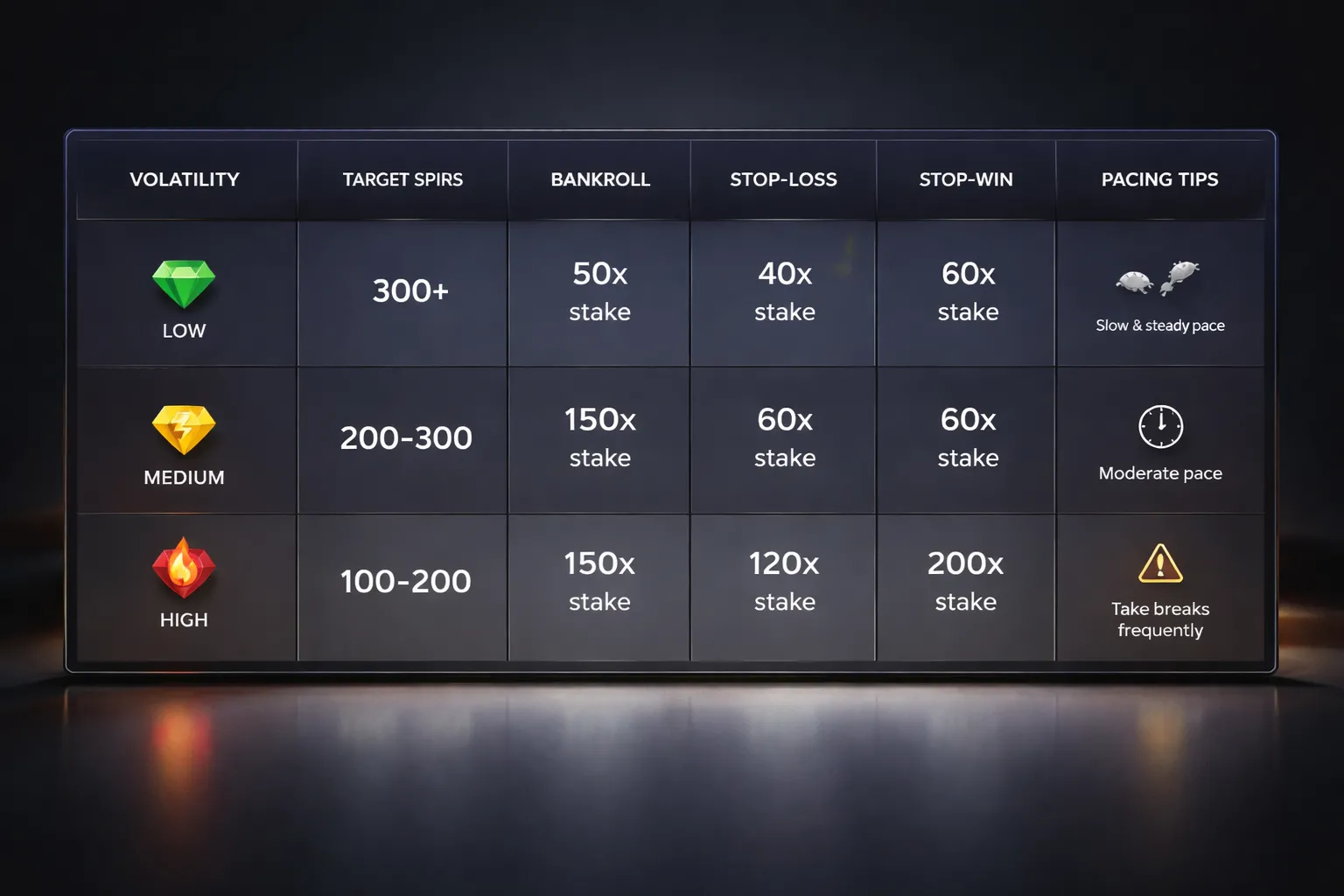
Most slots fall into low, medium, or high volatility. Low-volatility games pay often, and the wins are usually modest—rarely beyond 5x your stake—but they reduce the chance of rapid bankroll depletion. Medium volatility sits in the balanced middle. You can expect moderate dry spells, with wins around 10x to 50x your bet and occasional bonus features that add more substantial rewards. High-volatility slots are built for thrill-seekers. They can go hundreds of spins without a meaningful win, but a triggered feature may pay 100x to 1000x your stake or more. The trade-off is clear: bigger potential swings require more patience and capital.
How Return to Player Interacts With Variance
Return to Player, or RTP, is the theoretical payback over time, but volatility determines how that payback feels in the short term. A low-volatility game tends to realize its RTP more consistently, so actual results align more closely with the theoretical figure during a session. A high-volatility title can deviate dramatically from RTP in the short run, making results highly unpredictable. This does not mean high-volatility games are bad. It means their payouts are clustered differently, with long gaps followed by larger bursts. If you need steady entertainment, the low-volatility path is easier to follow.
Let Your Session Budget Choose the Game
The golden rule is simple: your session budget should dictate volatility, not the other way around. If you have a small bankroll, a high-volatility slot is statistically unwise because a long losing streak can wipe out your funds before a bonus feature appears. Experienced players often suggest a bankroll that can survive at least 500 spins. For a high-volatility game with a $1.00 bet per spin, that means a $500 bankroll just to have a fighting chance at riding out the variance. With a $100 budget, the same game could disappear quickly. A low-volatility slot, by contrast, stretches smaller budgets and keeps you spinning longer. The casino may offer every option, but your wallet should narrow the field.
Matching Your Temperament to the Reels
Bankroll size is not the only factor; your patience matters too. Low-volatility games suit players who enjoy frequent small wins and a relaxed pace. Medium volatility offers a middle path for those who want occasional features without extreme droughts. High-volatility games appeal to players who can accept long quiet periods for a shot at a larger payout. Be honest about your tolerance for losing streaks. A game that looks exciting can become stressful if every dry spell makes you anxious. The right choice is the one you can enjoy without regret, not the one that promises the most dramatic screenshot.
Choosing slot volatility is really a budgeting and self-awareness exercise. Start with what you can afford to lose, estimate how many spins that money should cover, and then pick a volatility profile that matches that plan. Low volatility protects playtime, medium volatility balances risk and reward, and high volatility trades patience for upside. When your bankroll and the game’s variance are aligned, the session feels intentional rather than improvised.

0 تعليقات
لا توجد تعليقات بعد. كن أول من يشارك تجربته.