

























The Pokies Strategy That Actually Holds Up: RTP, Volatility and Bet Sizing
Online pokies dominate online casino play in Australia, accounting for more than 60% of activity. That popularity keeps a lot of myths alive—hot machines, cold streaks, and systems that supposedly predict the next spin. The random number generator does not care about any of that. What does hold up is a disciplined approach: choose games with a sensible return to player, understand how volatile they are, and size your bets so your bankroll can survive the normal swings. None of this guarantees a win, but it makes every session a better-informed decision.
RTP Is a Long-Term Average, Not a Session Promise
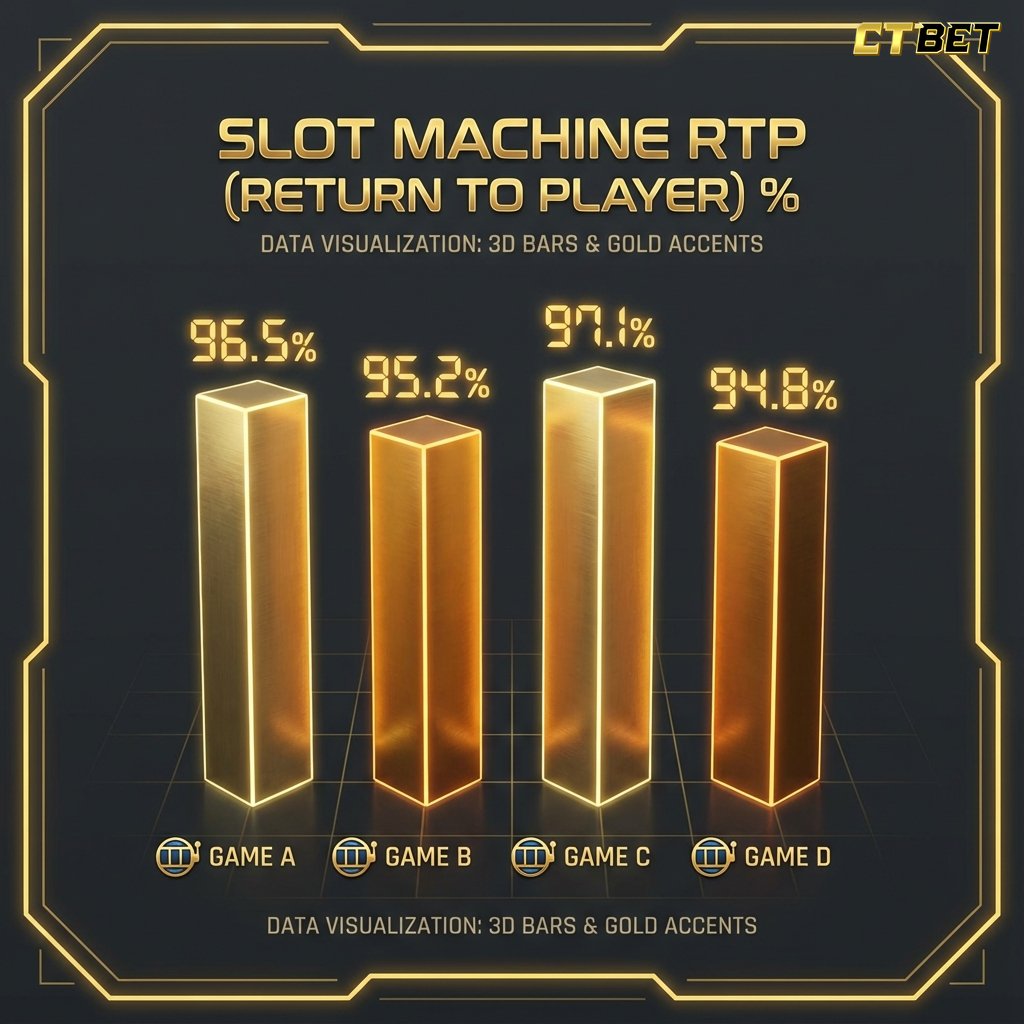
Return to Player, or RTP, is the theoretical percentage a pokie pays back over an infinite number of spins. A game with 96% RTP returns A$96 for every A$100 wagered on average; a 92% game returns A$92; a 99% game returns A$99. The gap between 96% and 92% is A$40 for every A$1,000 wagered, which is why experienced players treat 96% as a practical baseline. Below that, the house edge climbs and your expected playtime per dollar shrinks. The catch is that RTP is calculated over millions of spins. In a single session of a few hundred spins, you can win or lose far more than the percentage suggests. RTP tells you what a game pays back over the long run, not when a win will arrive.
Volatility Tells You How the Ride Feels
Volatility, also called variance, describes how a pokie distributes its payouts. Low-volatility games pay frequently but in smaller amounts. Your bankroll moves in a steadier line, which makes these games a better fit for clearing bonus wagering requirements or for players who want longer sessions with less drama. High-volatility games pay less often but can produce much larger wins. Long losing streaks are normal, and the upside is the reason people play them. Neither style is better in isolation. Low volatility suits steady play; high volatility suits players who accept dry spells in exchange for a shot at a bigger result. The key is to match the game's temperament to your goal rather than picking a game because a screen looks exciting.
Bet Sizing Is Your Real Control
You cannot change the RNG, but you can control how much each spin costs. Bet sizing is the bridge between RTP, volatility, and your bankroll. If you bet too large, a normal losing streak can end your session before the game's payout pattern has a chance to show. If you bet too small, you may preserve playtime but reduce the upside—though the more common and more expensive error is betting too big for the volatility. A sensible approach is to set a session budget first, then choose a stake that allows for a few hundred spins. That does not guarantee a win. It gives the game's distribution room to breathe. With high-volatility games, smaller stakes are generally more sensible because long dry spells are part of the design. With low-volatility games, a slightly larger stake can be reasonable if the RTP is strong and the budget supports it. The principle is simple: your bet size should match the game's variance and your tolerance for losing streaks. A stake that feels exciting for one spin can be reckless across a session; a stake that feels boring can be appropriate when variance is high.
Match the Game to the Job
A good strategy starts with the job you want the session to do. If you are clearing a bonus with wagering conditions, low volatility plus high RTP is usually the better combination. Steadier returns help you meet the requirement without wild swings that can end your bankroll early. If you are playing with your own money and want a realistic shot at a large win, high volatility plus high RTP can be appropriate—provided your bet size respects the dry spells. Avoid mixing goals. A high-volatility game is a poor choice for grinding a bonus, and a low-volatility game may not deliver the excitement you want from a personal session. The same player can use both styles at different times, as long as the choice is deliberate.
Common Mistakes That Undo Good Math
The most expensive mistakes are not mysterious. They are playing low-RTP games without checking, overbetting on high volatility, chasing losses, and assuming a machine is due for a payout. RTP and volatility can guide your choices, but discipline decides whether those choices survive contact with a real session. A game with strong numbers can still hurt you if your stakes are too large for its variance. A generous budget can still disappear quickly if you ignore RTP. No bet size can turn a negative-expectation game into a positive one, but poor sizing can make a bad session worse. Good strategy is less about finding a secret edge and more about removing avoidable leaks.
In short, a pokies strategy that holds up is not a system for beating the RNG. It is a set of choices: play higher-RTP games, match volatility to your goal, and size bets so your bankroll survives long enough for the math to breathe. That will not guarantee a win, but it makes every session a better-informed decision.

0 reacties
Nog geen reacties. Deel als eerste je ervaring.